The Power of Composting: Why and How to Turn Food Waste into a Resource
In my last blog post, "Reduce Food Waste: Small Changes, Big Impact," I highlighted how food waste contributes to 8–10% of global greenhouse gas emissions, making it a significant driver of climate change. While exploring ways to reduce my own food waste, I became increasingly curious about composting—one of the most effective solutions to addressing this issue.
Although I briefly mentioned composting in that post, I wanted to take a deeper dive into the benefits. I’ve been outdoor composting for a couple of years now, but recently, a family of wild boars moved into our village and started breaking into my outdoor compost bin. This created quite a mess—not just for me but for my neighbours too—so I had to find another solution.
Composting takes what would otherwise be waste and transforms it into a valuable resource: enriching soil, reducing methane emissions, and promoting sustainable living.
Whether you’re new to composting or looking for a more convenient way to do it, this blog explores its benefits, the different methods available, and why electric kitchen composters are becoming a practical, eco-friendly game-changer for many households.
Why Composting Matters
Food waste is a massive global problem. According to Love Food Hate Waste, a UK-based organisation focused on reducing food waste, 1.3 billion metric tonnes of food are wasted globally each year. When this food ends up in landfills, it decomposes anaerobically (without oxygen), producing methane, a greenhouse gas 86 times more potent than CO₂ over 20 years. Landfills filled with food waste account for 8–10% of global greenhouse gas emissions, contributing significantly to climate change. Composting is nature’s antidote to this problem.
Common Methods of Composting
Composting can fit into most people's lifestyle, thanks to a range of flexible methods. Here’s a brief overview of the most common ones:
1. Backyard Composting
A traditional method done in outdoor bins or heaps, where food scraps and yard waste naturally decompose over weeks or months. This method works best with a mix of “greens” (fruit peels, vegetable scraps) and "browns" (dry leaves, paper) and requires regular turning to ensure plenty of oxygen.
2. Worm Composting (Vermiculture)
This method uses worms (specifically red wigglers) to process food scraps into nutrient-rich compost known as “worm castings.” It’s compact, low-maintenance, and ideal for anyone without outdoor space.
3. Municipal Composting Services
Many urban areas now offer curbside organic waste collection. Food scraps and yard waste are composted on an industrial scale, producing large quantities of compost for community use. Here's a couple of useful links for food waste schemes based in Hong Kong and the UK.
4. Electric Composting
A newer, technology-driven solution, electric composters are sleek, compact appliances that rapidly process food waste into a dry, soil-like material. They’re hassle-free, odourless, and ideal for urban living or households without outdoor space.
The Case for Electric Composting
Initially, I was skeptical about getting an electric composter. After all, these devices consume energy and require fossil fuels to manufacture. I wondered: Could an electric composter truly offset its environmental footprint? After researching and doing some calculations, the answer is yes!
A single electric compost cycle processes 2–5 kilograms of food waste, which would otherwise produce approximately 1–2 kilograms of methane equivalent emissions in a landfill. Methane’s global warming potential (GWP) is 34–86 times worse than CO₂, and landfills are one of its largest sources. Electric composters, by contrast, only produce emissions from electricity use, which is far less harmful.
Even when considering the energy and materials required to manufacture and operate them, electric composters have lifetime environmental benefits that outweigh their initial production footprint, making them an excellent solution for sustainable households.
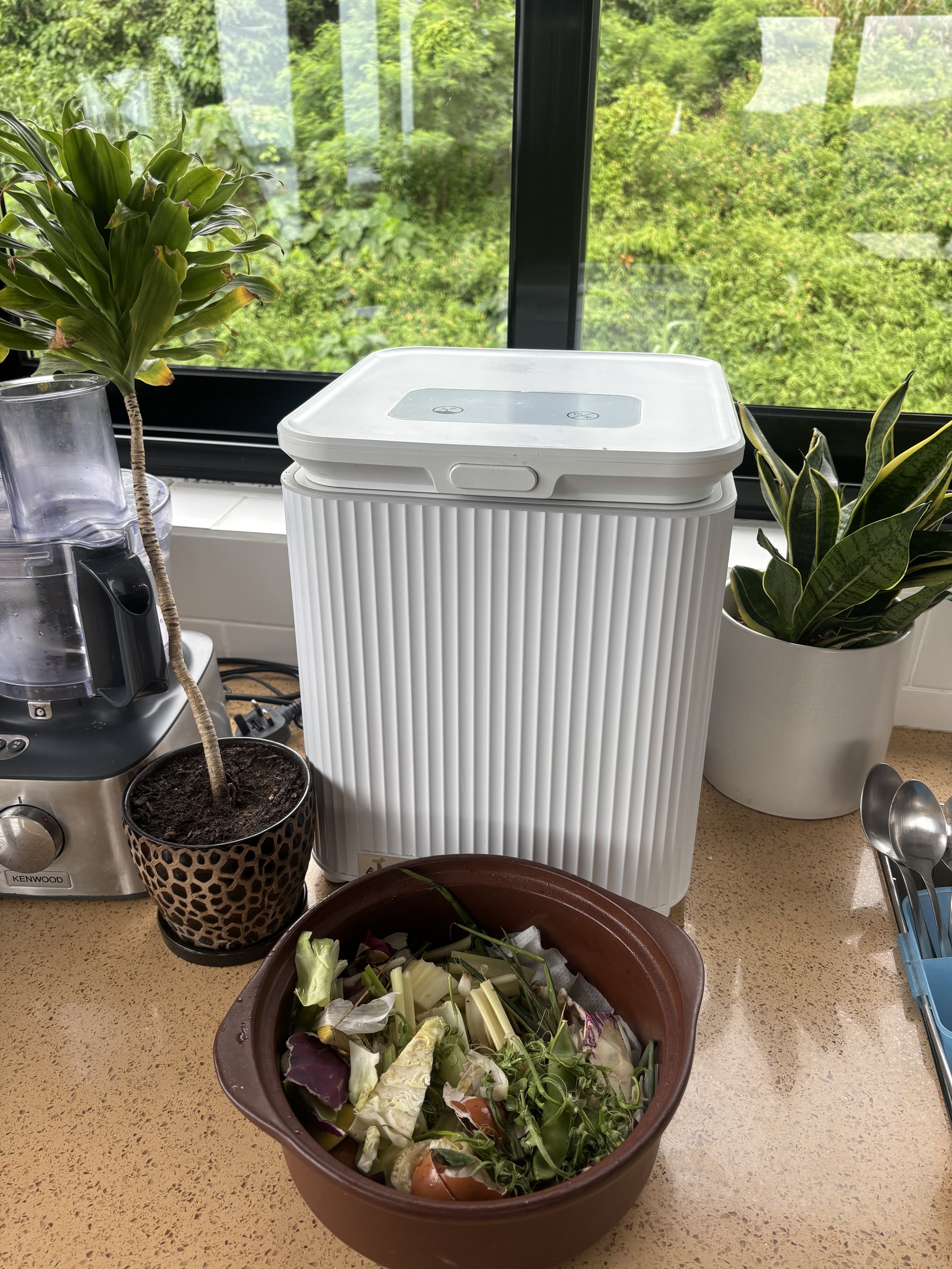
My electric composter.
Why Electric Composters Are a Great Solution
Electric composters stand out for their convenience and efficiency. Unlike traditional composting, which can take months to break down organic waste, electric units process scraps within hours or days. Their indoor-friendly design is perfect for urban spaces or households without outdoor space.
They also drastically reduce food waste volume, compressing scraps by 70–90% into a dry byproduct that’s cleaner and easier to store or repurpose. By diverting food waste away from landfills, electric composters eliminate the associated methane emissions and toxic leachate that can harm soil and water supplies.
While not entirely carbon-neutral, electric composters still represent a significant improvement over traditional trash disposal and offer a controlled, consistent, and eco-friendly way to manage food waste.
An Invitation
If you're ready to make a difference in how you handle food waste, here are a few simple steps you can take:
Start Composting: Choose a method that suits your space and lifestyle—whether that’s backyard bins, worm composting, municipal services, or an electric composter. Start small and experiment with what works best for you.
Reduce First: Composting is great for unavoidable food scraps, but remember that reducing waste is even better. Plan meals, freeze leftovers, or use up ingredients nearing expiration to ensure the least amount of food ends up in your compost.
Make the Most of Compost Output: Whether you’re using traditional methods or an electric composter, find ways to use the finished product! Add it to your garden soil, potted plants, or even donate it to a local community garden.
Spread the Word: Share your composting journey with friends, family, or neighbors. Encouragement and inspiration can go a long way in driving collective action toward reducing food waste.
A Small Step with a Big Impact
Whether you’re new to composting or looking for a more convenient approach, electric composters offer an accessible, eco-friendly solution to the global food waste problem.
With benefits like reduced methane emissions, smaller waste volumes, and a reusable product for your plants, electric composting is a powerful way to shrink your environmental footprint—all from the comfort of your kitchen.
It’s one small step for your household, but one big leap toward a more sustainable future.
What are you doing to tack Rough_North and reduce food waste in your home this week? Share your thoughts, questions or favourite tips in the comments below!