How to Make or Break a Habit
With the New Year here, many of us are looking to give it a kick start by making—or breaking—a habit. Whether it’s eating healthier, getting fitter, or learning something new, our habits are a reflection of our lives, and changing them can help us achieve important goals.
There’s something about the New Year that gives us that extra bit of willpower to aim for that all-important goal, yet sustaining those good intentions can be much harder work than we originally anticipate. Breaking bad habits can be even more of a challenge. If this sounds familiar, this blog post aims to share some of the tips and tricks I’ve learned to implement—and stick to—habits over the last few years.
The insights shared here come from two main sources: the first is James Clear’s book, Atomic Habits, which I read back in 2020, and the second is the podcast 5 Scientific Rules for Making & Breaking Habits! from The Diary of a CEO, which I listened to in 2022. Whether you’re starting fresh or ready to tackle old habits, these lessons might just help give you the edge.
Data Shows New Year is the Time to Start!
If you’re like me, you might be skeptical about the whole “New Year’s resolution” thing. But here’s the kicker: research suggests that setting New Year’s resolutions can actually improve your chances of success.
According to Bartlett, while most people give up their resolutions within a month, a solid 9% stick to them by the end of the year. Even more promising, psychologist John Norcross found that resolution-makers are more than 10 times as likely to change their behaviour compared to those who don’t set resolutions at all. Nearly 46% of people who make resolutions are still successful after six months.
So, setting that intention—a resolution, if you will—isn’t as pointless as you might think; it can act as a powerful starting point. The challenge is sustaining it once you’ve started. That’s where understanding habits comes in.

What Are Habits & Why Do We Have Them?
Habits are behaviours wired deeply into the brain, performed almost on autopilot. They’re prehistoric wirings designed to save us time and energy. Habits are stored in the brain’s basal ganglia, the habit control center, and are formed through repetition and practice. Once a habit is formed, it’s encoded in the brain forever—ready to be retrieved instantly, even if it’s replaced by a new habit.
This is why habits can feel so hard to break. They’ve become part of your wiring. But understanding how they’re formed, and how they function, can give you the tools to change them.
The Habit Loop in Making and Breaking Habits
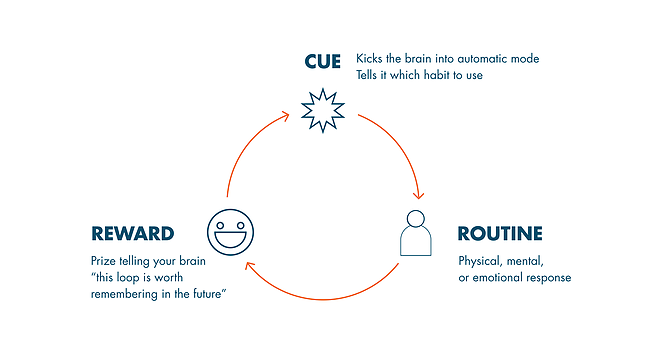
Habits operate through a Habit Loop, which consists of three steps:
Cue: A trigger that initiates the habit.
Routine: The behaviour or action itself.
Reward: The outcome that reinforces the habit.
To break a bad habit, you need to interrupt this loop. But here’s the thing: old habits are never truly forgotten. They’re merely overwritten by new habits. This is why repetition is key to solidifying new behaviors.
The Five Rules for Making and Breaking Habits
Rule 1: Stress Is Your Puppet Master
Most of us get that chronic stress isn't healthy for our mind or body, but stress also plays a massive role in habit formation, especially those linked to dopamine release (think smoking, sugar, or scrolling on your phone). High stress levels can lead to bad habits and poor decision-making.
Remember the famous Stanford marshmallow experiment? It showed that delayed gratification is critical for success, but stress makes it harder for people to delay gratification, leading to impulsive, short-term choices. To form better habits, keep stress levels low and create a calm environment for change.
Rule 2: Know Your Cues
To break a habit, you need to identify the cues that trigger it. Cues are often linked to the context of the behaviour—like reaching for snacks while watching TV. Once you identify the cue, you can avoid or change it.
For example, if you always snack late at night, ask yourself: What’s triggering this? Is it boredom? Stress? By removing or altering the cue, you make it easier to break the habit altogether.
Rule 3: Don’t Focus on Stopping Bad Habits—Replace Them
Trying to “stop” a bad habit often backfires because your brain becomes fixated on the very thing you’re trying to suppress. Instead, replace the habit with a positive alternative.
For instance, instead of saying, I’ll stop snacking between meals, replace the snack with a healthy, but delicious alternative instead. This gives your brain a positive, action-oriented goal to focus on. It takes time though, so be patient - persistence pays off! On average, it 66 days to form a new habit, but remember, this will be different for all of us.
Rule 4: You Need a Better Reason to Quit
To make lasting changes, you need intrinsic motivation—a deeply personal reason to change. External rewards (like losing weight to impress others) sadly aren’t enough to sustain the effort. This ties closely to James Clear’s idea that habits are most successful when they align with your identity, rather than being solely outcome-focused.
For example, instead of saying, I want to lose weight (an outcome), focus on becoming the type of person who priorities health and fitness. This shift in thinking helps you root your habits in who you are—or who you want to become—rather than what you want to achieve.
If your goal is to prioritise health, think about intrinsic reasons that matter to you: feeling more energetic, improving your mental health, or being able to keep up with your kids. When your habits are tied to your identity, every small action reinforces the person you’re becoming. As James Clear says, “Every action you take is a vote for the type of person you wish to become.”
Change happens when you not only recognise the pain of staying the same but also begin to see yourself as the kind of person who values and embodies the change you’re making.

Rule 5: Willpower Is Not Enough
Willpower alone also won’t cut it. It’s a limited resource, like a muscle that gets tired after overuse. In fact, an experiment by Muraven, Baumeister, and Tice found that people who practiced restraint (eating radishes instead of cookies) had depleted willpower and gave up sooner on a puzzle. Sustainable habits require more than willpower: they need systems and strategies that make the desired behaviour easier to achieve.
An Invitation
Making or breaking a habit can feel overwhelming, but try these three tips to help you tack Rough North:
Start Small: Focus on one habit at a time and break it into manageable steps. Big changes are built from small wins.
Change Your Environment: Remove cues for bad habits and set up triggers for good ones. For example, leave out your weights the night before you go to sleep, or don't buy the junk food in.
Track Your Progress: Use a habit tracker to stay accountable. Seeing your streak grow can be a powerful motivator to keep going.
What are you doing to tack Rough_North and make or break a habit this year? Let’s start a conversation about how we can all make sustainable changes for the better. Share your experience in the comments below or with someone close to you!