Creatine and Protein: Understanding the Difference for Women's Health and Longevity.
There's a lot of information out there right now about optimising your health—especially women’s health, which thankfully has gained much more attention in recent years.
And, if your algorithms are anything like mine, you’ve probably seen countless reels and shorts about protein and creatine supplements. But with so many snippets of information flying around, it’s easy to feel lost when it comes to understanding the actual differences between them, how they can benefit you, how much to take—and when.
I’d already been toying with the idea of adding both creatine and protein supplements to my diet for some time, but it wasn’t until I listened to the podcast "Longevity Debate: The Truth About Weight Loss, Muscle, and Creatine" on The Diary of a CEO that everything really started to click. It’s a long listen but well worth it, I feel. It features four leading experts in women’s health who share actionable strategies for improving health span, managing hormonal changes, and busting common myths about exercise and nutrition.
Since hitting my 40s, I’ve noticed changes in my energy levels, especially in the afternoon, which also happens to be my regular workout time. I hadn’t made any major changes to my diet or routine, so I was left confused and frustrated by the mid-afternoon slump, the lack of motivation to train, and, on top of it all, the unwarranted brain fog.
In this blog post, I’ll break down everything you need to know about protein and creatine supplements, so you too can decide if they might help you tack Rough_North for a healthier Body & Mind.
Creatine: A Game-Changer for Women
What is Creatine?
Creatine plays a vital role in energy production across the body, powering fast processes in the brain, muscles, heart, and gut. While often associated with bodybuilding, its benefits stretch far beyond that, supporting cognitive health, recovery, and even gut function.
Key Benefits of Creatine for Women:
Brain Health:
Improves focus, cognition, and recovery.
Reduces fatigue and supports brain metabolism under stress.
Gut and Heart Health:
Provides energy for heart and gut functions.
Helps alleviate symptoms of IBS or gut-related issues.
Muscle and Bone Strength:
Enhances muscle performance, fights insulin resistance, and protects bone density as women age.
Why Women Specifically Benefit from Creatine:
Lower Natural Stores: Women typically have only 70–80% of the creatine stores that men do.
Dietary Gaps: Most diets fail to provide sufficient creatine. For example, you’d need to consume around 22 chicken breasts a day to meet the recommended intake through food alone.
How to Use Creatine:
Start with 3–5 grams daily to saturate your tissues.
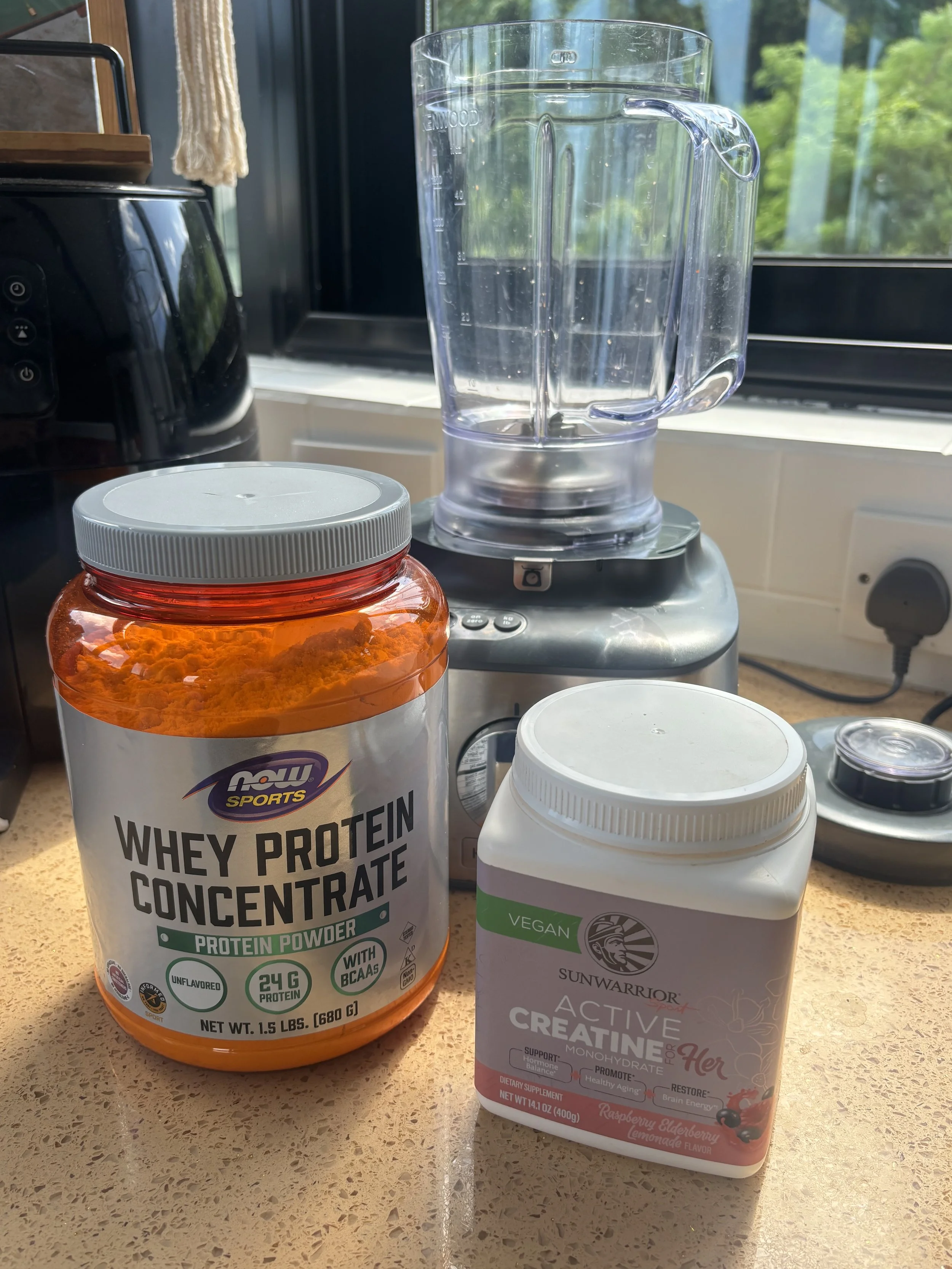
My current creatine & protein supplements.
Protein: The Foundation of Strength and Longevity
Protein is essential for building muscle, maintaining metabolic health, and preventing frailty as we age. Yet, many women aren’t consuming enough to meet their needs for daily activity or long-term health.
Recommended Protein Intake:
General Health: 0.8–1.6 grams of protein per kilogram of body weight.
For Strength Training: Active women who engage in regular strength training generally benefit from 1.6–2.2 grams of protein per kilogram of body weight.
Longevity and Aging: Women who consume more than 1.6 grams per kilogram of protein tend to have lower frailty scores later in life.
To put this into perspective, I typically weigh between 63–65 kg, meaning I aim for about 123.5 grams of protein a day. To help meet this, I add one scoop of whey protein concentrate (24 g protein) to my morning shake, covering 19.4% of my daily goal. Adding protein at breakfast or post-workout makes all the difference!
To maximise muscle protein synthesis and maintain satiety throughout the day, it’s important to spread your protein intake evenly across 3–5 meals. This approach ensures your body has a consistent supply of amino acids to support muscle repair and keep hunger at bay.
Key Benefits of Protein for Women:
Muscle Maintenance and Fat Loss: Protein helps repair muscle tissue, improves muscle quality, and supports fat loss.
Metabolic Health: Reduces insulin resistance and inflammation, particularly important for women with PCOS or endometriosis.
Prevention of Muscle Breakdown: Women naturally use more amino acids than men and risk losing lean muscle when fasting or fuelling.
An Invitation
Adding protein or creatine to your routine doesn’t need to be overwhelming. Here are a few simple ways to make meaningful changes:
Start Small: Begin with a daily scoop of whey protein, or add 3–5 grams of creatine to your morning routine.
Plan Your Meals: Make protein the star of every meal—think eggs, Greek yogurt, or lean meats.
Fuel Your Workouts: Time your protein intake around your training sessions to maximise recovery and muscle-building benefits.
Stay Consistent: Remember, consistency over time delivers results, especially with supplements like creatine.
Remember, creatine supports energy production across the brain, muscles, and gut, helping combat fatigue and improve recovery, while protein builds, repairs, and maintains muscle, supports metabolism, and staves off frailty. Together, they make a powerful duo for optimising women’s health, longevity, and performance.
What are you doing to tack Rough_North for Body and Mind this week? Share your thoughts, questions, or favorite tips in the comments below!